
“Coaching” is about more than just “coaching”.
In this #coachbetter episode, Kim and Diana talk about how this is one of the big “aha” moments for our cohort members in the Thrive Coaching Certificate every year.
There is something really confusing about being a coach – and it’s right there in the title. What do we mean by the word coach? And should coaches always be “coaching”? Because if coaching is about supporting the thinking of your coaching partner, and helping them uncover what they already know, what happens if they actually don’t know. How do you step in and support them, if you’re supposed to be coaching?
KIM: It feels a little strange to say, but the job title of instructional coach can be kind of confusing. For one thing, the word coach is something that most people are familiar with – but usually in a different context (often sports coaching). In a professional setting, people often think coaching means something like mentor or in-house consultant. So right there at the start, we have two potential challenges:
- A lack of clarity about the role
- A misunderstanding of the process of the work
Because we know that instructional coaching isn’t really like sports coaching or like mentoring.
DIANA: Instructional coaching is about supporting the thinking of your coaching partner through
- goal setting
- data collection
- application of targeted strategies in the classroom
- and ongoing conversations focused on reflective questioning
Within the scope of this work, there are opportunities for different types of support. In the Thrive Coaching Certificate we refer to these different types of support as coaching stances, and they include:
- Consulting: you are leaning into your own expertise, offering strategies, suggestions & resources
- Collaborating: you are working together 50/50, as equals
- Coaching: you are focusing on asking the right question to help your coaching partner uncover what they already know
So when we say “sometimes coaching isn’t just coaching” what we mean is, sometimes our work as coaches also includes consulting and collaborating.
KIM: And this is one of the most common “aha” moments in the Thrive Coaching Certificate. When our cohort members realize that there are three different coaching stances that a coach can take within a single coaching conversation, they often breathe a sigh of relief. Because they have usually been struggling with either:
- over-stressing about asking the perfect question
- feeling like they have to know the answer to every question
But once they know there is space for both consulting and coaching within one conversation, they realize there’s more to just coaching than, well, “coaching”.
DIANA: Interestingly, this can present another problem, because now we have to learn how to navigate between all three of these stances, which includes:
- finding the balance between stances within a conversation, and
- being able to switch between stances seamlessly when needed
If we can’t find that balance, it’s very common to get stuck in consulting because it’s safe, easy and comfortable for both the coach and the coaching partner. But if you’re consulting all the time, where’s the growth for your coaching partner? And if you’re too focused on the big deep coaching questions, you could lose your coaching partner because you’re not providing the support they need. Because this challenge often happens on either end of the spectrum – either feeling like you have to be the expert all the time OR you can “only” always ask these great deep, probing coaching questions – sometimes we tend to go from coaching to consulting (or from consulting to coaching) and spend less time collaborating, which is usually more about planning, logistics & taking action.
What’s YOUR level of coaching mastery?
All coaches go through various stages of coaching mastery. Once you identify where you’re at, you can begin to build the skills needed to move to the next stage.
This quiz is based on real-life case studies compiled from years of working with coaches inside The Coach Certificate & Mentorship Program!
When you receive your results, you’ll also get your matching case study from the STRIVE Case Studies to see where you fit in the stages of coaching mastery.
Ready to tackle your challenges and move on to the next level in YOUR coaching practice?
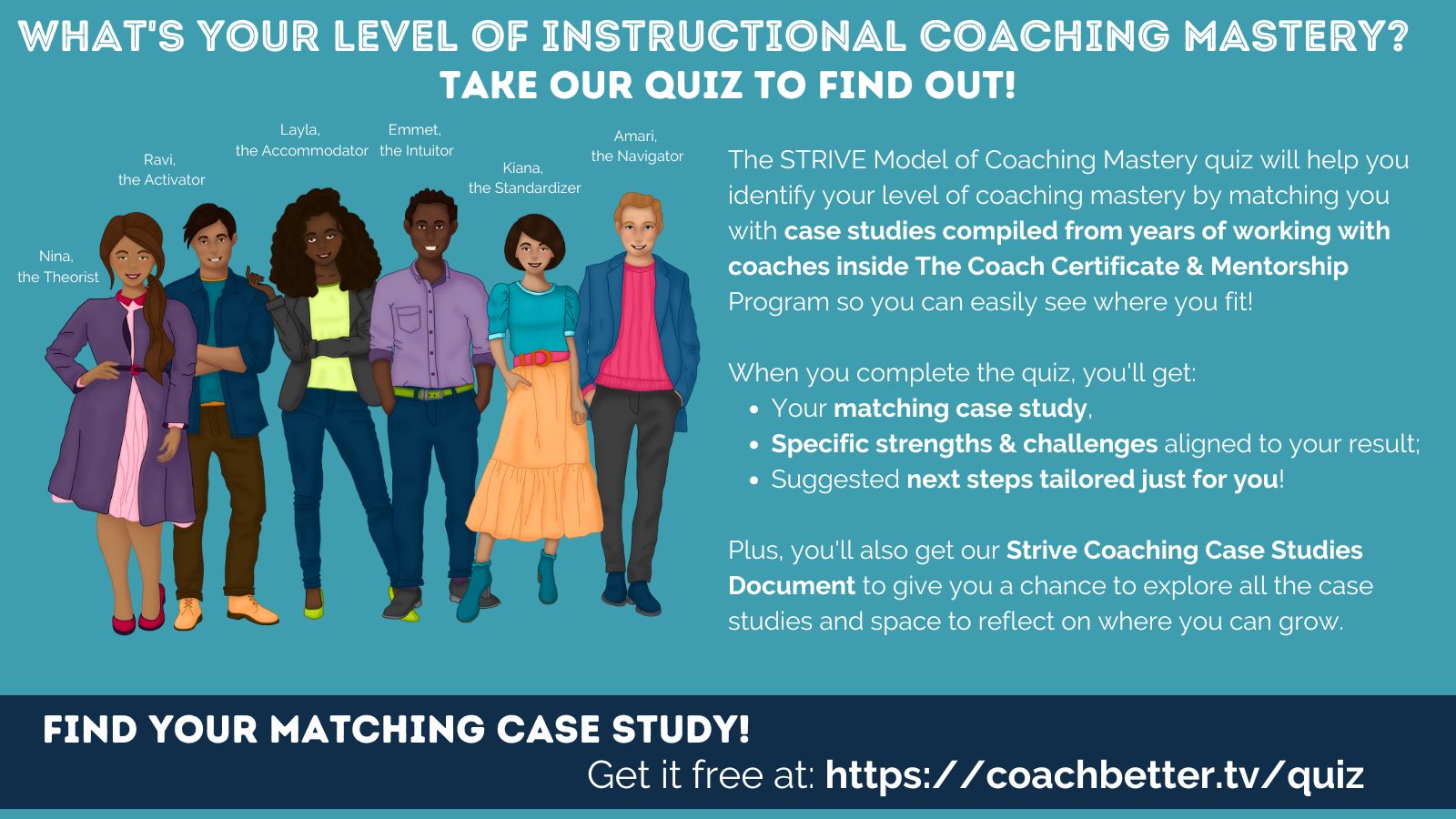
The STRIVE Model of Coaching Mastery quiz will help you identify your level of coaching mastery by matching you with case studies compiled from years of working with coaches inside The Coach Certificate & Mentorship Program so you can easily see where you fit!
When you complete the quiz, you’ll get:
- Your matching case study,
- Specific strengths & challenges aligned to your result;
- Suggested next steps for each stage;
Plus the Case Study Document includes:
- Case studies leveled by coaching mastery;
- A framework to identify essential stages of professional growth & key areas to focus on in your professional learning;
- Alignment with the THRIVE Model for a Successful Coaching Culture;
- Space for you to reflect & prioritize so you can take action immediately!
You’ll go straight to the Quiz, and get the Case Study Document via email.
KIM: Ok, so, why does this matter?
This is actually more important than just you, as the coach, knowing about the coaching stances. Because most teachers might not know what a coaching conversation can be or how it works, they won’t know to ask for a certain type of support. As the coach, YOU have to figure that out in that moment. And that’s a very unique skill: learning how to uncover what kind of support your coaching partner needs and then providing it – all in the same conversation. And while you’re at it, making it visible for them so they know what kind of support they can get the next time they come to work with you. Because, if the support you’re offering doesn’t align with what the person needs, their time spent with you is not going to be useful for them – and that’s definitely not what we want. For example: if your coaching partner needs consulting, and you keep asking them more questions, that’s only going to lead to frustration.
Likewise if they’re ready to think something through and all you do is offer solutions, they’re usually going to resist any options you share because it didn’t come from their own thinking. So, as a coach, you need to be able to figure out the clues that will tell you when to make the shift into a different stance. Being able to read those clues ensures that your coaching partner feels heard and seen – and that you’re providing the support they need in that moment.
And in most cases, if you get it wrong, your coaching partner won’t point it out because they might know something feels “off” but not have the specific vocabulary needed to express it. So you can get stuck in the wrong stance – and not even realize it! And they may be more reluctant to work with you again…
DIANA: Hopefully you can see why being able to navigate coaching stances (and understanding that coaching isn’t always just “coaching”) is important.
So, if this is something you want to work on in your practice, here are a few steps you can take…
- If you’re new to coaching, you can learn more about the different stances in this episode about the differences between coaching, collaborating, and consulting
- (we’ll link up here & in the show notes for you)
- If you’re currently coaching, consider which of the stances you feel most confident in and which you have room to grow
- where might you push yourself this year? – you might even consider holding yourself accountable in a coaching session by sharing your goals with you coaching partner
- If you’ve been coaching for a while, consider tracking how much time you spend in each stance and ask yourself what this data suggests
KIM: Understanding and navigating coaching stances is an advanced coaching skill – and being able to do this within the span of one single coaching conversation can be a big learning curve – that’s why we support you every step of the way in our courses, in particular the Thrive Coaching Certificate.
WATCH THE VIDEO
🔗 KEY LINKS FOR THIS EPISODE
⭐️ Episodes Referenced
- The 3 Key Roles of a Coach: Exploring the Difference between Consulting, Collaborating & Coaching
- Knowing How to Switch Stances as a Coach
Ready to create a coaching culture that improves student learning and builds belonging?
Come learn with me!
I help educators, instructional coaches, informal or positional leaders work together to create thriving coaching cultures that improve student learning and build belonging.
Coaching programs based on the Thrive Model, with clarity, consistency and community, can create time and space for educators to feel seen, heard, respected and valued for the experts that they are – creating a sustainable system of educator professional growth that ultimately improves student learning.
For this kind of coaching to thrive we need to focus on both the micro view of your coaching practice and the macro view of your coaching program, so while you’re developing your individual coaching practice you’re also intentionally developing a sustainable coaching culture.
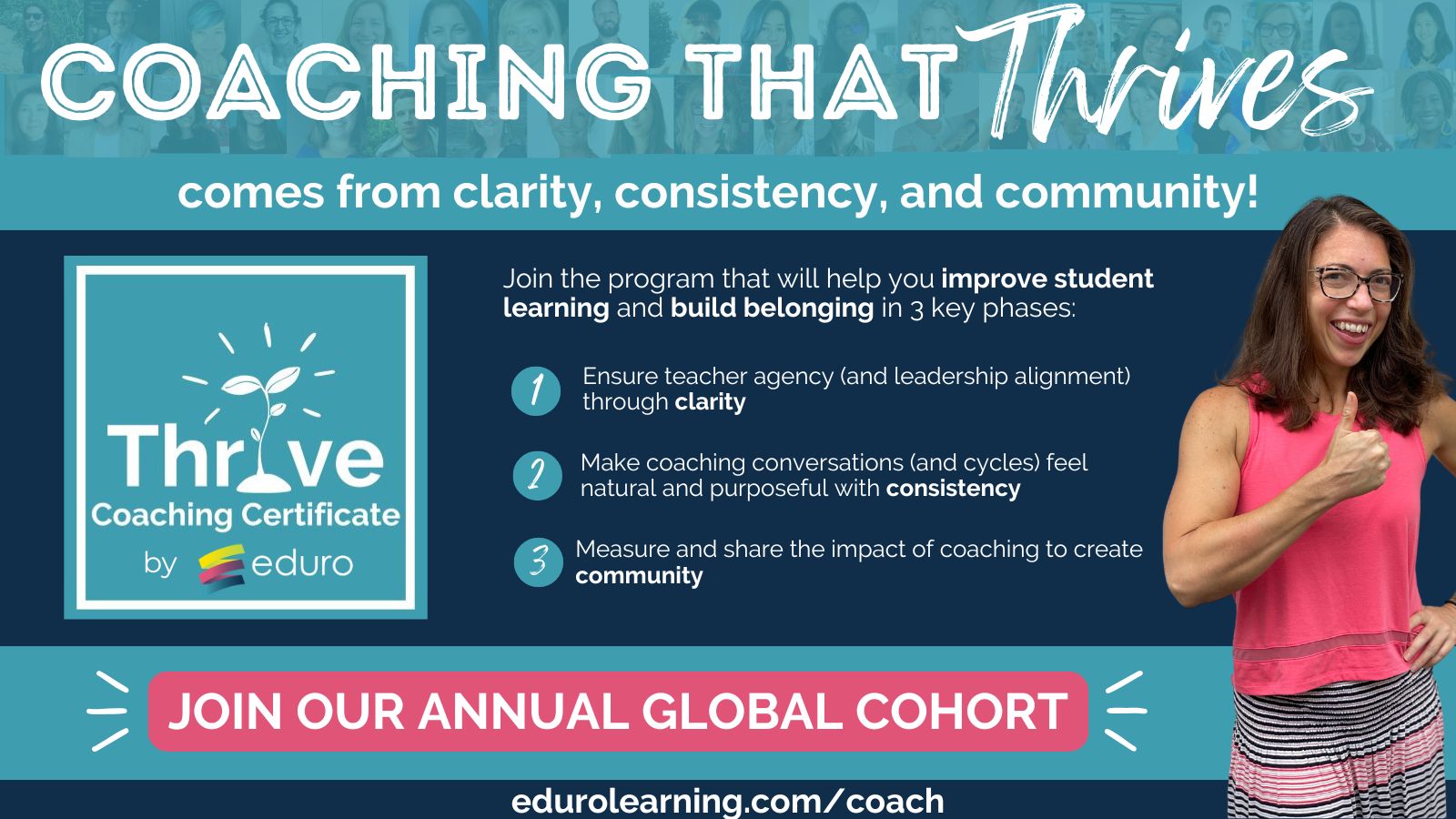
If you’re ready to build this kind of coaching culture in your school community, join us for the Thrive Coaching Certificate program!
Wherever you are in your coaching journey, we can support you!
When you’re ready, there are three key ways we can work together:
- in the Thrive Coaching Certificate,
- in a private mentoring package, or
- through work directly with your school.
Leave a comment below, or reply to any of my emails and let’s start a conversation to see how we can work together to create a thriving coaching culture in your school setting!
Connect with us!
- Subscribe to the podcast iTunes | Spotify | Stitcher
- Follow us on social media: Instagram | LinkedIn | YouTube
- Join our #coachbetter Facebook group
- Read more from Kim: all books & articles
- Explore our courses for coaches
Recent Comments