
We want to give you a peek inside our Coach Certificate & Mentorship Program. Coaches taking part in this academic-year-long journey have graciously given us permission to post some of their learning and reflections from the private coursework they are undertaking during this program. Where possible, we have shared the course and the action task to give context for the guest post.
Watch Darcy’s Video
Read Darcy’s Reflection
At the beginning of the program, I struggled to define a clear goal for myself because the role of instructional coach felt incredibly broad. Between leading professional development, facilitating grade-level meetings, supporting our Instructional Leadership Team (ILT), engaging in one-on-one coaching cycles, and collaborating with administration, it was difficult to determine where to focus my energy. I ultimately centered my work around two main areas: strengthening our ILT process and developing my one-on-one coaching practice.
Our ILT had initially been moving in a negative direction, but with support from my principal, I was able to help redirect the work toward a more collaborative, inquiry-based process grounded in classroom observations, goal setting, reflection, and adjustment. At the same time, I began engaging more deeply in one-on-one coaching cycles with teachers, which became the most transformative part of my learning journey.
Several milestones and artifacts significantly supported my growth. Creating informational materials that clarified what coaching is and is not, as well as outlining the coaching cycle, helped establish transparency and trust with teachers. Over time, I realized these materials needed to be differentiated depending on the type of coaching support being provided. Another highly valuable resource was the coaching binder I created, which included coaching questions, facilitation tools, and reflective activities inspired by Elena Aguilar’s work.
The most impactful milestone for me was the one-on-one coaching cycle and reflection process. Watching coaching videos back and receiving feedback from Kim helped me become more aware of my coaching habits and pushed me to shift from being an “answer-giver” to a facilitator of teacher thinking and reflection.
One major realization came when I noticed that a newer teacher I was coaching frequently sought validation and solutions from me. Through reflection and coaching conversations with Kim, I began intentionally redirecting questions back to the teacher, encouraging her autonomy and decision-making. Instead of immediately offering advice, I learned to pause, listen more deeply, and ask reflective questions that supported the teacher in generating her own ideas and solutions.
This shift toward facilitative coaching has been my biggest area of growth. At times, the process still feels bumpy and requires intentional practice. Effective coaching requires listening deeply, processing what a teacher is saying, becoming genuinely curious, and crafting questions that lead to deeper reflection. My goal moving forward is simply to continue practicing. Teaching now feels almost instinctive to me after years in the classroom, and I hope coaching will eventually develop that same natural flow and responsiveness.
One challenge I encountered this year involved navigating my relationship with administration while building trust with teachers. Because my principal had once been my student teacher, I was often publicly connected with administration in ways that may have unintentionally positioned me as aligned with evaluative leadership rather than as a confidential support person for teachers. Reflecting back, I realize I would have approached that dynamic differently. To help create clearer boundaries and build greater trust moving forward, I will be moving my workspace out of the main office area into a separate space where teachers can meet privately and where I can better focus on coaching and professional development planning.
The support I received through this program was exactly what I needed during this stage of my development. The structure, resources, articles, podcasts, and weekly accountability kept me consistently engaged in learning. Most meaningful of all were my one-on-one coaching sessions with Kim. Having a safe, reflective space to process challenges, receive feedback, and experience coaching from the coachee perspective deeply impacted both my learning and my coaching practice. I truly believe those conversations accelerated my growth more than anything else this year.
This learning has already had a direct impact on my coaching program at my school site. I have become far more intentional about designing coaching conversations that cultivate teacher reflection, ownership, and autonomy rather than dependency. Looking ahead, I plan to continue refining these skills through deliberate practice. Next year, I am organizing a weekly Zoom practice group with other instructional coaches in my district where we can role-play upcoming coaching conversations using coach/coachee/observer structures similar to those used in our Elena Aguilar trainings. My hope is to continue strengthening my coaching practice while helping build a stronger coaching culture across our district.
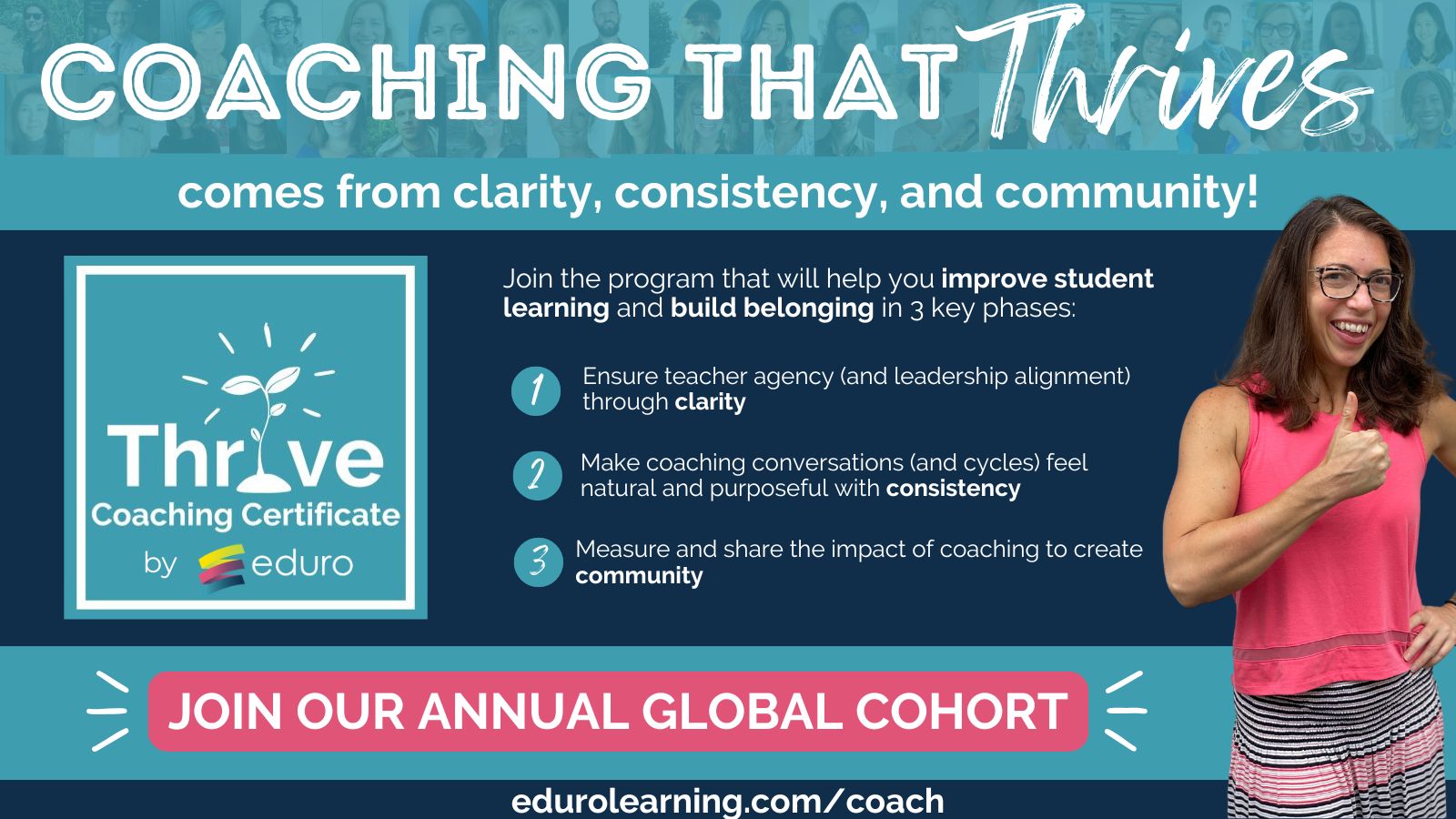
Ready to create a thriving coaching culture that improves student learning and builds belonging?
Come learn with me!
I help educators, instructional coaches, informal or positional leaders work together to create thriving coaching cultures that improve student learning and build belonging.
Coaching programs based on the Thrive Model, with clarity, consistency and community, can create time and space for educators to feel seen, heard, respected and valued for the experts that they are – creating a sustainable system of educator professional growth that ultimately improves student learning.
For this kind of coaching to thrive we need to focus on both the micro view of your coaching practice and the macro view of your coaching program, so while you’re developing your individual coaching practice you’re also intentionally developing a sustainable coaching culture.
If you’re ready to build this kind of coaching culture in your school community, join us for the Thrive Coaching Certificate program!
Wherever you are in your coaching journey, we can support you!
When you’re ready, there are three key ways we can work together:
- in the Thrive Coaching Certificate,
- in a private mentoring package, or
- through work directly with your school.
Leave a comment below, or reply to any of my emails and let’s start a conversation to see how we can work together to create a thriving coaching culture in your school setting!
Connect with us!
Subscribe to the podcast iTunes | Spotify | Stitcher
Follow us on social media: Instagram | LinkedIn | YouTube
Join our #coachbetter Facebook group
Recent Comments