
When you stepped into a coaching role, you were probably very focused on understanding and being prepared for coaching conversations and coaching cycles.
Our episode next week is with one of my graduates, Ula, from Getting Started as an Instructional Coach, in our conversation she points out that when she joined the course she was joined because she wanted to learn how to have a coaching conversation and the steps are in a coaching cycle, but right away, even as she looked at the syllabus, as she says on the call she realized “that was just one chapter in the book.”
The big mindset shift Ula had by the end of the course was that the success of coaching is dependent on so much more than coaching conversations. It’s actually about the systems we have to make coaching successful – including the relationships we intentionally build, the trusting environment we create and the ways we make time and space for coaching within the school day. This is why it takes the Thrive Model of clarity, consistency and community to make coaching successful and sustainable over time.
And this is a big challenge for coaches and leaders in developing a coaching program.
And that’s the mindset shift for today’s conversation: We often think the work of coaches is just about doing the coaching, but the work is actually about building a culture of coaching, and the systems and structures that enable coaching to be sustainable with our very busy school days.
One of the hardest transitions to make when you move into a coaching role – and is equally hard for school leaders to support when they hire coaches – is to understand that building a coaching culture, and being a coach is about so much more than coaching conversations.
We got into coaching because we want to have coaching conversations, but actually it’s all the systemic things and the culture building that’s going to make coaching successful.
We know from tons and tons of research (I’ll point to my favorite, Coaching Matters by Joellen Killion, Cindy Harrison, Chris Bryan and Heather Clifton) that coaching can only be successful if there are key structures in place, things like…
- A shared a vision, purpose and goal for coaching along with a definition of coaching
- Hiring and development of coaches
- Clarity around the role of the coach
- Leadership alignment about the work of coaches and how they support them
- Scheduling coaches to focus on coaching work
- Building a culture of coaching
- Practices for evaluating coaches and evaluating coaching
(side note: We have so many podcasts about all of these topics, I’ll link a few of them up here & in the show notes for you: What Makes Coaching Work, Creating a Sustainable Coaching Culture, Making Instructional Coaching Sustainable.)
But what we don’t often think about is that developing these structures takes a long time, and often requires repeating year after year, even in established coaching programs. The person that’s on the “front lines” of this work is the coach, or the advocate for coaching (even if they’re not yet in the role).
That means that even if you were hired to do the coaching, you also have to do
- The relationship building
- The communication about coaching
- The culture development
- The measurement of the impact
All the things that make coaching work that are outside the practice of the actual coaching.
In fact, when Ula graduated from Getting Started as an Instructional Coach course she shared this:
When I thought about coaching, I thought about the act of coaching, what the course has shown me is the whole system around coaching so the conversation can be happening in a successful way. I didn’t realize the scope of the system around it (leadership, tracking your time, advocating for the work)
That’s why this concept – I call it the macro view (and I just shared a whole episode about this topic which I’ll link here and in the show notes for you) – is so essential.
Because even though we might have been hired to do the coaching, it takes so much more than the coaching conversations and coaching cycles to actually build a coaching culture. (Lori Cohen and I also talked about this earlier this season, if you haven’t listened to or watched that episode yet – I’ll link it here for you).
To give an example, this really reminds me of what it’s like to be a small business owner. You start the business because you want to be doing the thing you sell (creating your art, delivering your service, supporting your clients, whatever it may be). But as soon as you step out and start that business you realize you also have to do aaaallll the things you don’t want to do. You’re suddenly the CFO, the marketing director, the sales person, the website developer, etc etc etc. It’s a big shift. You go from being focused on the work you want to do, to recognizing that there’s so many more systems and structures that must be in place before you can actually do that work.
What’s YOUR level of coaching mastery?
All coaches go through various stages of coaching mastery. Once you identify where you’re at, you can begin to build the skills needed to move to the next stage.
This quiz is based on real-life case studies compiled from years of working with coaches inside The Coach Certificate & Mentorship Program!
When you receive your results, you’ll also get your matching case study from the STRIVE Case Studies to see where you fit in the stages of coaching mastery.
Ready to tackle your challenges and move on to the next level in YOUR coaching practice?
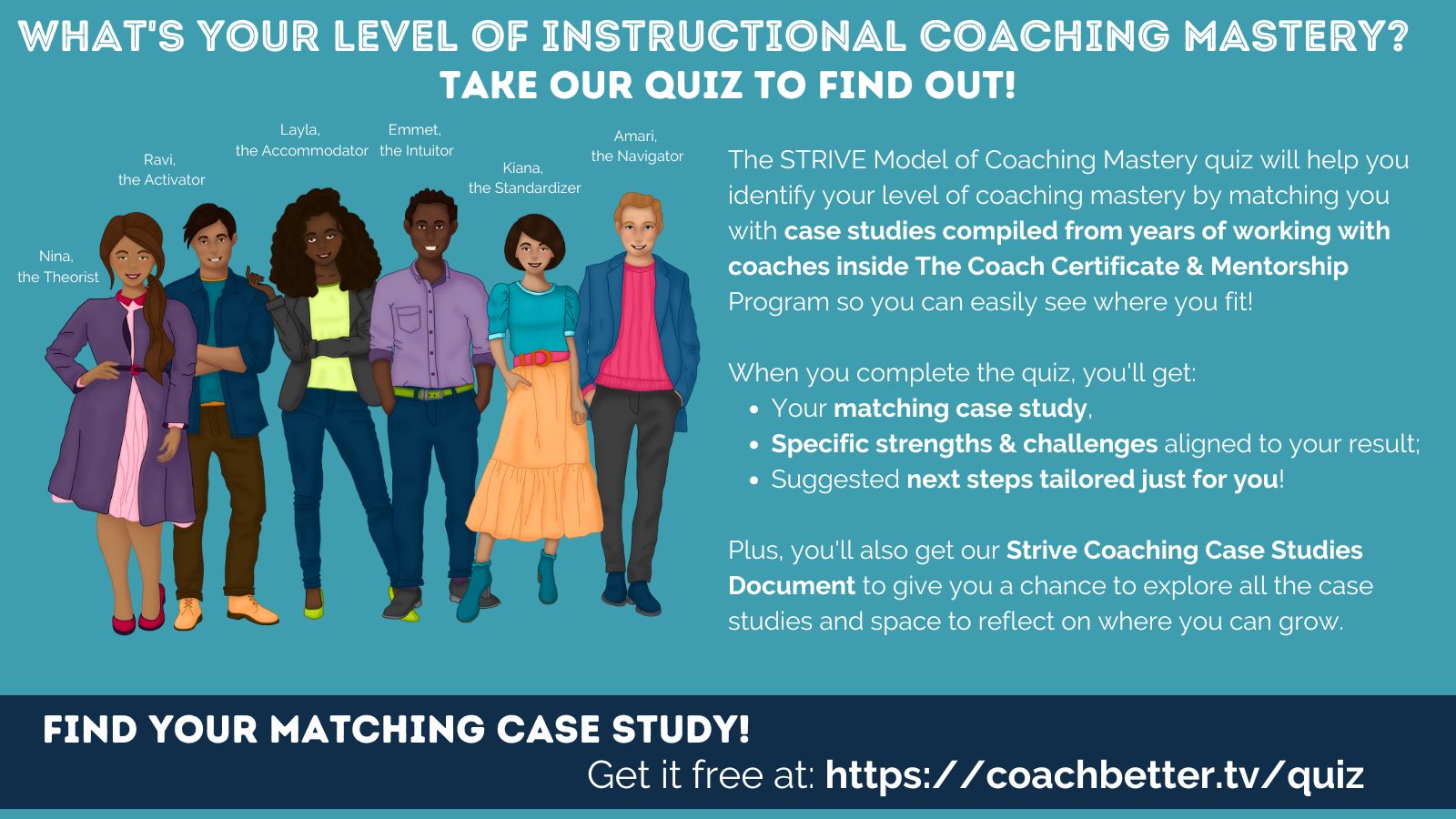
The STRIVE Model of Coaching Mastery quiz will help you identify your level of coaching mastery by matching you with case studies compiled from years of working with coaches inside The Coach Certificate & Mentorship Program so you can easily see where you fit!
When you complete the quiz, you’ll get:
- Your matching case study,
- Specific strengths & challenges aligned to your result;
- Suggested next steps for each stage;
Plus the Case Study Document includes:
- Case studies leveled by coaching mastery;
- A framework to identify essential stages of professional growth & key areas to focus on in your professional learning;
- Alignment with the THRIVE Model for a Successful Coaching Culture;
- Space for you to reflect & prioritize so you can take action immediately!
You’ll go straight to the Quiz, and get the Case Study Document via email.
This is exactly the same challenge all instructional coaches face (it’s especially jarring for new coaches, but even experienced coaches struggle with this). When you’re in the classroom you have a clear focus and boundaries: it’s all about your students.
When you step out of the classroom suddenly you need to think about the systems that support coaching, the relationships you need to build, the ways you need to advocate for coaching, all that “other stuff” that is needed to make coaching work, but it’s so much more than having coaching conversations and supporting your coaching partners in coaching cycles.
That’s why I designed the Thrive Model to focus on both the micro view of your coaching practice AND the macro view of your coaching program. You need both – and it’s not easy to make that mindset shift.
Want to see what it might be like to move into an instructional coaching role in reality?
I’m offering a free LIVE workshop on exactly that topic to help you work through some of the surprises you might face in stepping into a new role. You’ll learn all about the ways that you might be expected to:
- lead without being a formal leader;
- see the big picture, often without having all the puzzle pieces;
- inspire your colleagues without having a class of your own; and
- be the connection between teachers and leaders, without really being part of either team.
It’s not always easy to make this transition, and there are some key strategies you can apply to feel confident, calm and capable – even in your first year as an instructional coach! We’ll talk them through together on this LIVE workshop. Get all the details and register at edurolearning.com/live
Moving into a coaching role can feel like you’re in the “messy middle” because you’re no longer in the classroom with really clearly defined expectations, but you’re also not a school leader, with clearly defined authority. You are learning and building new leadership skills that stem from your expertise as a classroom teacher, and can definitely be the bridge to a leadership position, but you’re in a gray area as a coach.
This can be even more challenging in international schools because of frequent staff turnover and lack of clarity and consistency in vision, so you really need to be aware of the new layers to the work when you step into a coaching role.
So, based on our conversation today, is there something you might need to pay more attention to that is actually outside the scope of doing the coaching? Like Ula realized in the story at the beginning of this episode , the work of coaching is more than just the micro view of your coaching practice, it’s also the macro view of developing the culture and the systems that make coaching successful. Is there an opportunity for you to zoom out and look at the big picture of Clarity, Consistency and Community within your program development?
And that brings me back to Ula again: Her big mindset shift in the course was recognizing the importance of, and how to do, all this other work.
Without Getting Started as an Instructional Coach, stepping into an instructional coaching role can be a huge shock. Just like Ula, most new coaches are so focused on the work of coaching, they might not even realize the other aspects of building a coaching program that need to be in place to actually be able to do the work they were hired to do.
That’s what I want you to take away from today’s conversation: for coaching to be successful, coaches (and anyone passionate about coaching) needs to be aware of, and understand the systems and structures that help build a coaching culture. It’s not enough to just focus on the practice of coaching, we also have to support the development of a coaching program and culture.
WATCH THE VIDEO OR LISTEN TO THE PODCAST
🔗 KEY LINKS FOR THIS EPISODE
- Getting Started as an Instructional Coach
- Register for the LIVE Workshop: New to Coaching
- Join the Getting Started Waitlist
Ready to create a coaching culture that improves student learning and builds belonging?
Come learn with me!
I help educators, instructional coaches, informal or positional leaders work together to create thriving coaching cultures that improve student learning and build belonging.
Coaching programs based on the Thrive Model, with clarity, consistency and community, can create time and space for educators to feel seen, heard, respected and valued for the experts that they are – creating a sustainable system of educator professional growth that ultimately improves student learning.
For this kind of coaching to thrive we need to focus on both the micro view of your coaching practice and the macro view of your coaching program, so while you’re developing your individual coaching practice you’re also intentionally developing a sustainable coaching culture.
If you’re ready to build this kind of coaching culture in your school community, join us for the Thrive Coaching Certificate program!

Wherever you are in your coaching journey, we can support you!
When you’re ready, there are three key ways we can work together:
- in the Thrive Coaching Certificate,
- in a private mentoring package, or
- through work directly with your school.
Leave a comment below, or reply to any of my emails and let’s start a conversation to see how we can work together to create a thriving coaching culture in your school setting!
Connect with us!
- Subscribe to the podcast iTunes | Spotify | Stitcher
- Follow us on social media: Instagram | LinkedIn | YouTube
- Join our #coachbetter Facebook group
- Read more from Kim: all books & articles
- Explore our courses for coaches
Recent Comments